
Spring Container란?
스프링 컨테이너는 스프링의 핵심이다. 스프링 애플리케이션에서 객체(Bean)들을 생성하고 관리하는 컨테이너를 말한다.
왜 컨테이너가 필요하나요?
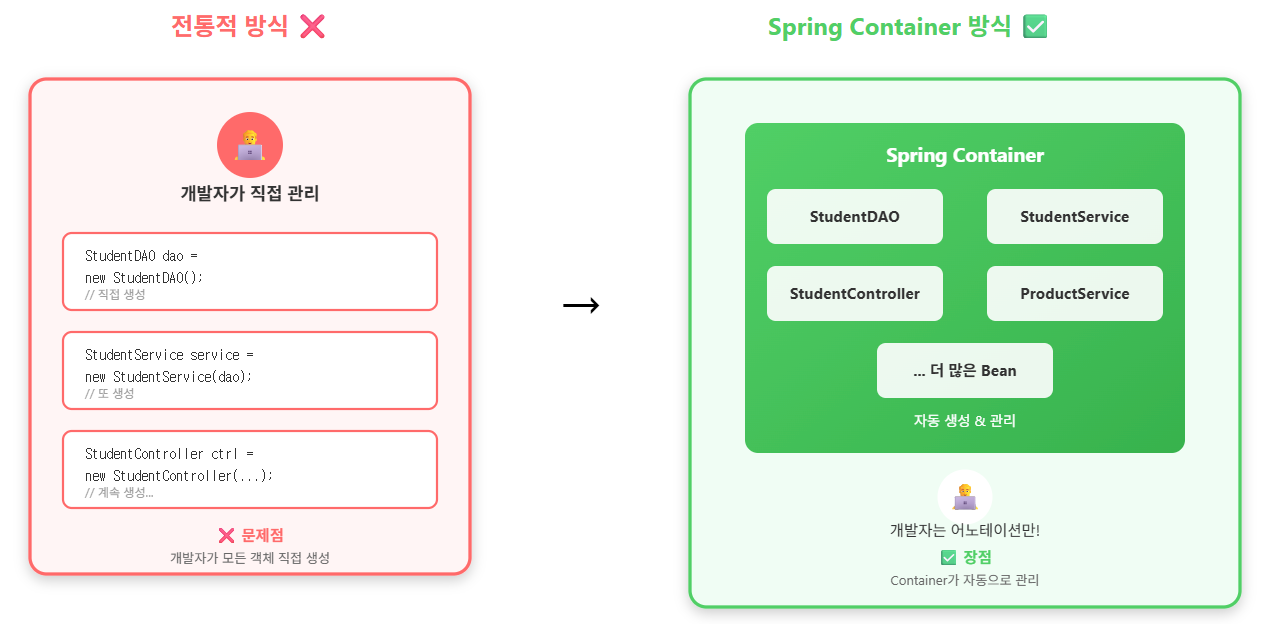
// 기존 방식 - 개발자가 직접 관리
public class StudentController {
    private StudentService service = new StudentService(); // 직접 생성
    private StudentDAO dao = new StudentDAO();             // 직접 생성

    // 객체들 사이의 관계도 직접 설정해야 함
}
기존방식으로 하면
- 코드가 복잡해진다.
- 테스트하기 어렵다
- 나중에 수정하기 힘들다
- 메모리 낭비가 발생한다.
하지만 spring container를 사용하면
- 객체 생성을 자동으로 해준다.
- 객체들간의 관계도 자동으로 연결해준다.
- 하나의 객체만 만들어서 공유한다(싱글톤)
- 테스트하기 쉽다.
이러한 장점이 있다.
Container의 역할
Spring Container의 4가지 역할
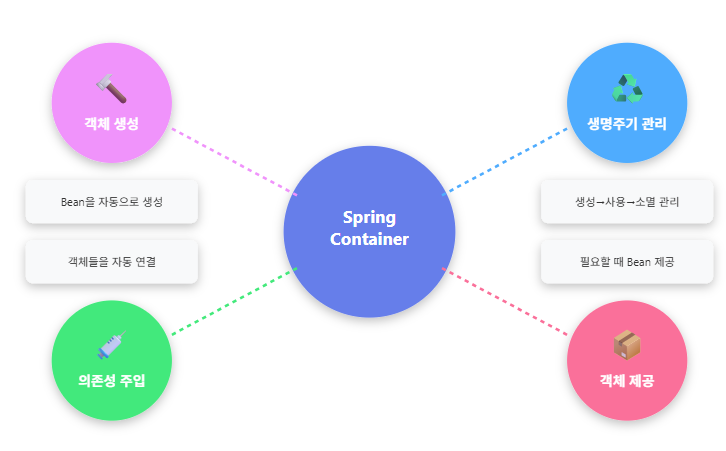
1. 객체 생성 - Bean을 자동으로 생성
2. 객체 생명주기 관리 - 생성부터 소멸까지 관리
3. 의존성 주입 - @Autowired로 자동 연결
4. 객체 저장 및 제공 - 필요할 때 꺼내 쓸 수 있게
Container의 동작 원리
1단계: 스프링 애플리케이션 시작
// 서버 시작 시
public static void main(String[] args) {
    SpringApplication.run(MyApp.class, args);
    // Spring Container가 생성됨
}
2단계: 클래스 스캔
Container가 프로젝트 전체를 스캔하면서 특정 어노테이션이 붙은 클래스를 찾는다
@Controller  // 발견!
public class StudentController { }

@Service  // 발견!
public class StudentService { }

@Repository  // 발견!
public class StudentDAO { }
3단계: 객체 생성
발견한 클래스들의 객체를 생성해서 Container에 저장한다.

// Container 내부에서 실행되는 것 (개발자가 직접 하지 않음)
StudentController controller = new StudentController();
StudentService service = new StudentService();
StudentDAO dao = new StudentDAO();

// Container에 저장
container.put("studentController", controller);
container.put("studentService", service);
container.put("studentDAO", dao);
4단계: 의존성 주입
각 객체가 필요로 하는 다른 객체들을 자동으로 연결해준다.
@Controller
public class StudentController {
    @Autowired
    private StudentService service;
    // Container가: service = container.get("studentService");
}
5단계: 애플리케이션 실행
모든 준비가 끝나면 애플리케이션이 정상 작동한다.

Container의 종류
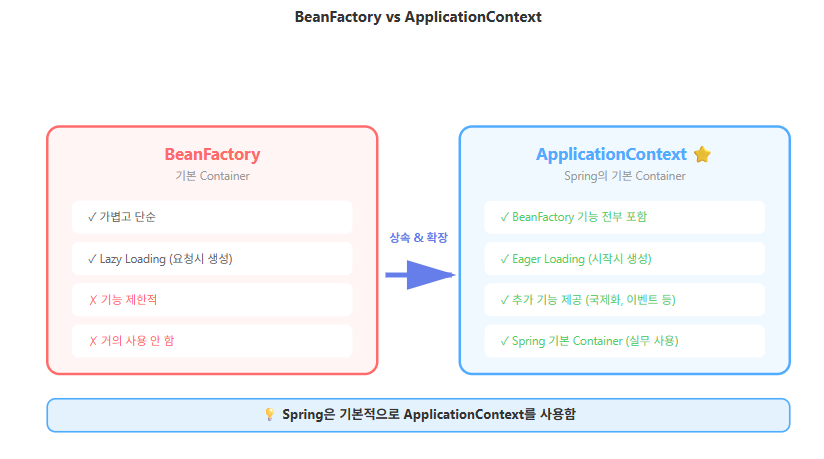
Spring에는 두 가지 주요 Container가 있다.
1. BeanFactory
가장 기본적인 Container로 기본 기능만 제공한다.
특징
- 가볍고 단순
- Bean을 요청할 때 생성
- 거의 사용하지 않음
2. ApplicationContext(주로 사용, 이것만 알면 됨)
BeanFactory를 상속받아 더 많은 기능을 제공한다.
특징
- BeanFactory의 모든 기능 포함
- 시작할 때 모든 Bean 생성
- Spring에서 기본적으로 사용하는 Container
SpringMVC에서 Container의 위치
SpringMVC 에서는 Container가 부모-자식 구조로 나뉘어 있다.
1. Root ApplicationContext(부모)
역할: 전체 애플리케이션에서 공통으로 사용하는 Bean 관리
ex) Service, DAO, DB 관련 Bean
2. Servlet ApplicationContext(자식)
역할: 웹 관련 Bean 관리
ex) Controller, ViewResolver, HandlerMapping
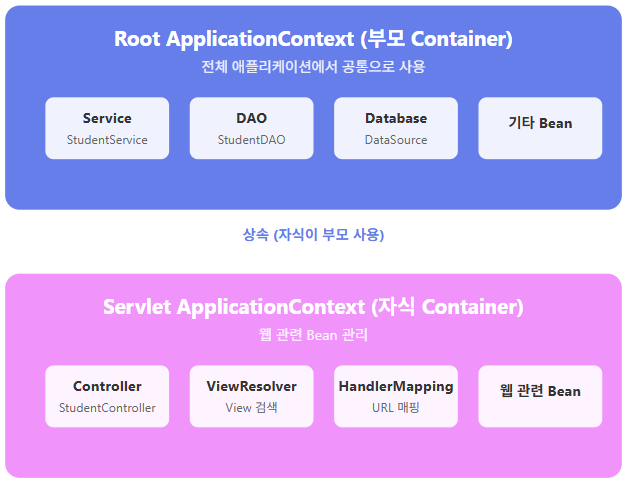
자식 Container는 부모 Container의 Bean을 사용할 수 있다.
'Archive > Java 풀스택 아카데미' 카테고리의 다른 글
| [TIL] 16. 11월 Spring Framework(Controller) (0) | 2025.11.04 |
|---|---|
| [TIL] 15. 10월 Spring Framework(Bean) (0) | 2025.10.28 |
| [TIL] 13. 10월 Spring Framework (0) | 2025.10.12 |
| [TIL] 12. 9월 Spring Framework (0) | 2025.09.30 |
| [TIL] 11. 9월 알고리즘(Greedy, DP) (0) | 2025.09.22 |


